
Other Paper Model Websites
Other Paper Models
My other paper model designs, some are related to Astronomy and space exploration
and some are not, enjoy.
70
 71
71
 72
72
 73
73
 74
74
 75
75
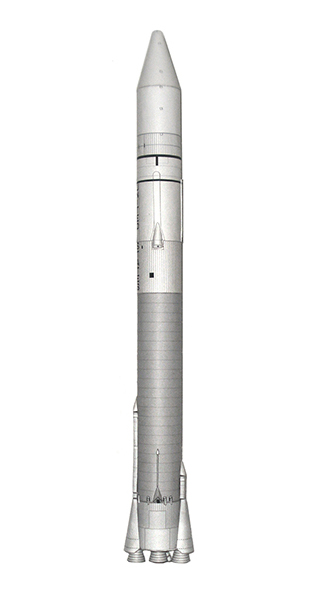
70..Atlas Centaur D -
The Atlas-Centaur is a two-stage launch vehicle consisting of an Atlas first stage and a Centaur second
stage connected by an interstage adapter. Launches were conducted from Launch Complex 36 at the
Cape Canaveral Air Force Station in Florida. After a strenuous flight test program,
Atlas-Centaur went on to launch several crucial spaceflight missions including Surveyor 1, and Pioneer 10/11.
The Atlas Centaur D flown for 24 missions between 11 August 1965 and 21 August 1972. Two of these were failures.
Download
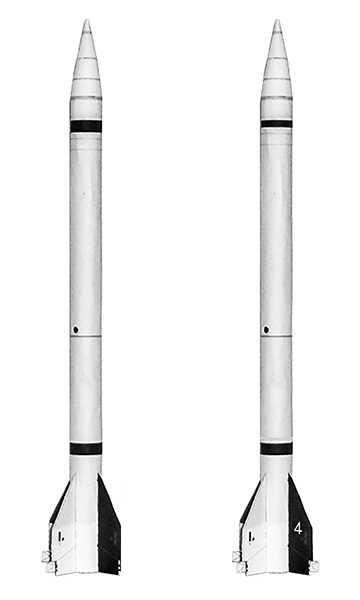
71..Viking 1 and 4 Sounding Rockets -
Viking 1 - This was the first launch of a U.S. designed and built rocket capable of carrying a payload to space.
This took place on May 3, 1949. Viking 1's engine shut down prematurely.
At that time, the rocket had reached a speed of 2,350 miles per hour (3,780 kilometers per
hour). Viking 1 continued to climb to an altitude of 50 miles (81 kilometers).
As it fell back to Earth, 291 seconds after launch, the rocket broke up and was scattered across many miles
of the Proving Grounds.
Viking 4 - launched on May 10, 1950, it was the first sounding rocket to be launched from the deck of a ship.
The flight was perfect, reaching 106.4 mi (171.2 km), more than double that reached by Vikings 1 and 3.
NOTE: This kit contains both models.
Download
72..Titan IIIC -
The Titan IIIC was an expendable launch system used by the United States Air Force from 1965 until 1982. It
was the first Titan booster to feature large solid rocket motors and was planned to be used as a launcher for
the Dyna-Soar, though the spaceplane was cancelled before it could fly. The majority of the launcher's
payloads were DoD satellites, for military communications and early warning, though one flight (ATS-6) was
performed by NASA.
Download
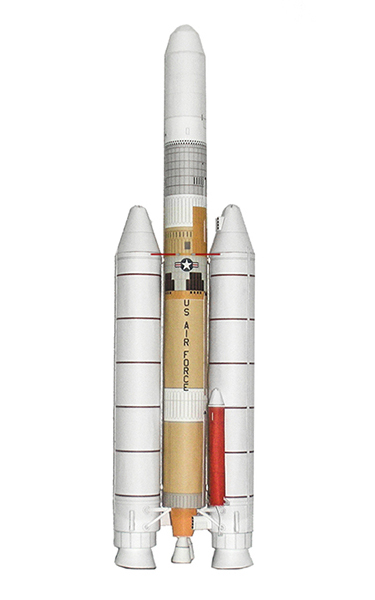
73..Titan IIID -
Part of the Titan rocket family, the Titan IIID first flew on 15 June 1971, launching the first KH-9
satellite. It was retired from service in 1982, and replaced by the uprated Titan 34D. All launches
occurred from Space Launch Complex 4E at Vandenberg Air Force Base.
Download
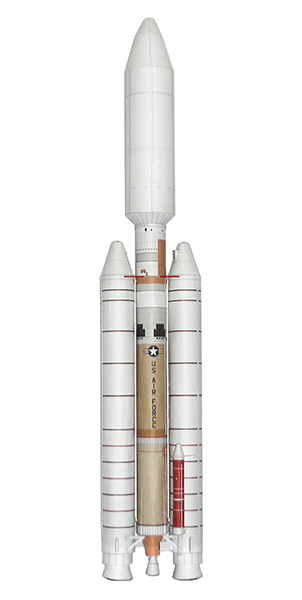
74..Titan IIIE -
The Titan IIIE or Titan 3E, also known as the Titan III-Centaur, was an American expendable launch
system. Launched seven times between 1974 and 1977, it enabled several high-
profile NASA missions, including the Voyager and Viking planetary probes and the joint West
Germany-U.S. Helios spacecraft. All seven launches were conducted from Cape Canaveral Air Force
Station Launch Complex 41 in Cape Canaveral, Florida.
Download
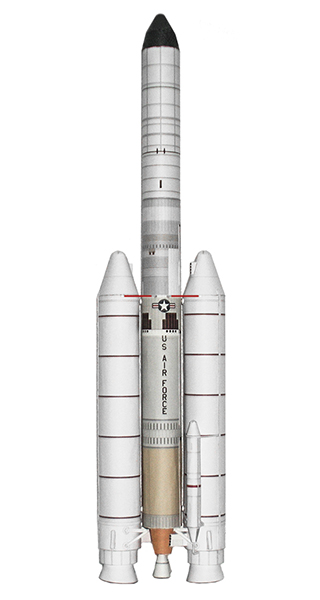
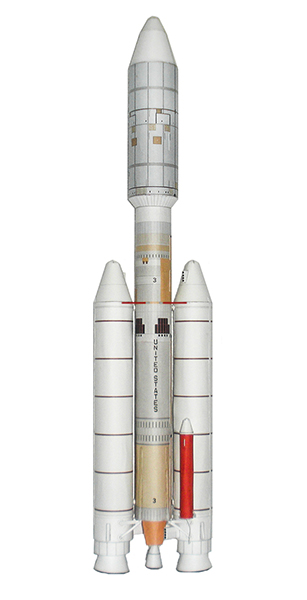
75..Titan IVA -
Billed as "assured access to space" by the U.S. Air Force, the Titan IVA was introduced for the
specific purpose of carrying large military satellites into space.
It was first flown on 8 June 1990, and last Titan IVA rocket launched on 12 August 1998.
A total of 22 Titan IVA rockets were launched, with two failures.
Download
76
 77
77
 78
78
 79
79
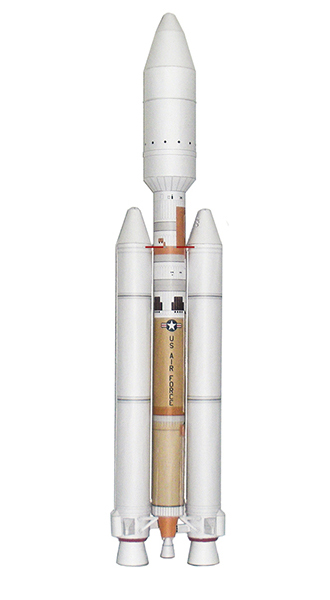
76..Titan IVB..Last Titan rocket to fly -
The mighty Titan -- apillar in American rocketry for five decades -- flew into orbit for the final time
Wednesday, October 19, 2005, capping a distinguished career of heavy-lifting that has spanned the nation's space age.
It Carried a payload for the U.S. National Reconnaissance Office.
This model depics the last Titan rocket.
Download
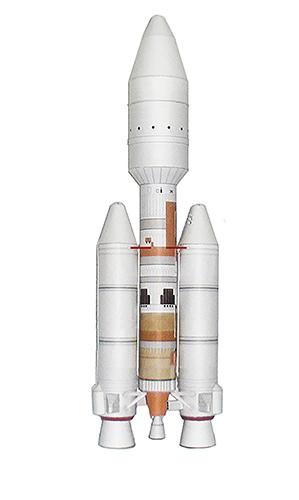
77..Titan IVB..Cartoon Version -
Cartoon version of the Titan IVB, a fun model to build and enjoy.
Download
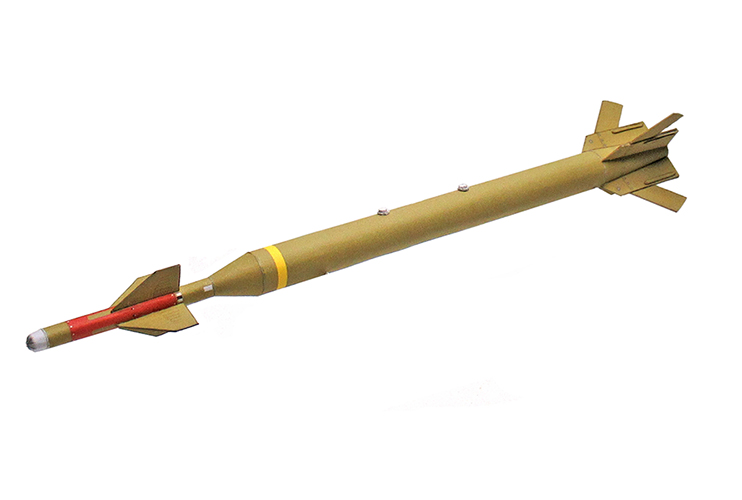
78..GBU-28 Bunker Buster (Guided Bomb Unit - 28) -
is a 4,000 - 5,000-pound (1,800 - 2,300 kg) class laser-guided "bunker busting" bomb
deployed in less than three weeks due to an urgent need during Operation Desert Storm (1991) to penetrate
hardened Iraqi command centers located deep underground. Only two of the weapons were dropped
in Desert Storm and One GBU-28 was dropped during Operation Iraqi Freedom (2003).
There are unconfirmed reports of its deployment during 2008-2009 Gaza
War and confirmed extensive use in its 2021 Gaza operation, codenamed - Guardian of the Walls.
Download
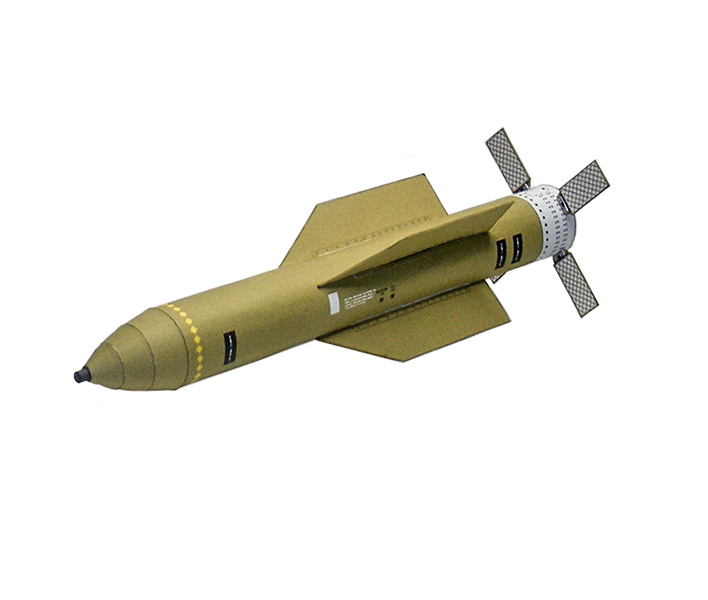
79..GBU-57 Bunker Buster -
GBU-57 series MOP (Massive Ordnance Penetrator) is a 30,000-pound (14,000 kg) class, 20.5-foot-long
(6.2 m) precision-guided munition "bunker buster" bomb. The US Air
Force has said that the GBU-57 can penetrate up to 200 ft (60 m) of unspecified material before exploding.
The first combat use of the GBU-57 MOP came on June 22, 2025, when seven Northrop B-2 Spirit stealth
bombers dropped a total of fourteen GBU-57 bombs on Iran's Fordow Uranium Enrichment Plant and Natanz
Nuclear Facility.
Download